Juniperus chinensis

juniperus chinensisJuniperus chinensis grows as a shrub or tree with a very variable in shape, reaching 1-20 m tall. This native of northeast Asia grows in China, Mongolia, Japan, Korea and the southeast of Russia.

The leaves grow in two forms, juvenile needle-like leaves 5-10 mm long, and adult scale-leaves 1.5-3 mm long. Mature trees usually continue to bear some juvenile foliage as well as adult, particularly on shaded shoots low in the crown. This largely species often has dioecious either male and female plants, but some individual plants produce both sexes of flowers. The blue-black berry-like cones grow to 7-12 mm in diameter, have a whitish waxy bloom, and contain 2-4 seeds; they mature in about 18 months. The male cones, 2-4 mm long, shed their pollen in early spring.

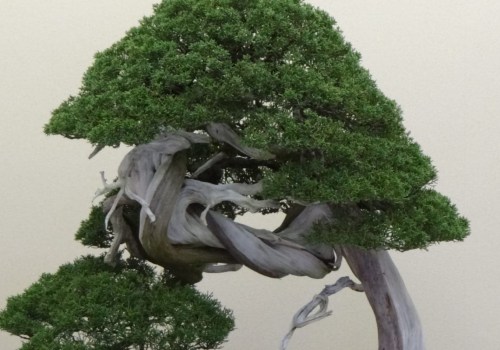
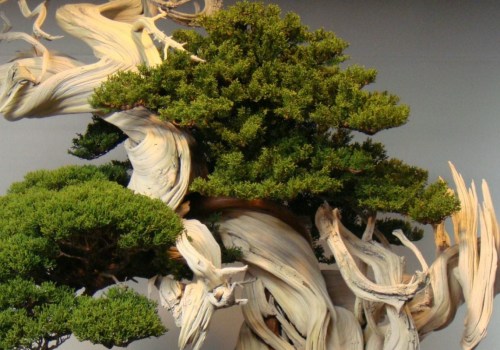
This popular ornamental tree or shrub in gardens and parks has more than 100 named cultivars selected for various characters, such as yellow foliage (e.g. cvs. ‘Aurea’, ‘Tremonia’), permanently juvenile foliage (e.g. cv. ‘Shoosmith’), columnar crown shape (cv. ‘Columnaris’), abundant cones (e.g. cv. ‘Kaizuka’), etc. Chinese Juniper, as a non-native species in the U.S., should not be used there in natural plantings. The cultivar ‘Shimpaku’ is a very important bonsai subject. The Chinese juniper is widely used in bonsai, both as individual plants, such as the 250-year-old “Omiya tree” in the Birmingham Botanical Gardens in the UK, and in groups, such as the well-known Goshin on display at the National Bonsai and Penjing Museum at the US National Arboretum.
The hybrid between Juniperus chinensis and Juniperus sabina, known as Juniperus × pfitzeriana (Pfitzer Juniper, synonym J. × media), is also very common as a cultivated plant. This hybrid grows only as a shrub, never a tree, making it suitable for smaller gardens.

Juniperus procumbens

Juniperus procumbensJuniperus procumbens is a low-growing shrubby juniper native to the southern Japan. Its status as a wild plant is disputed; some authorities treat it as endemic on high mountains on Kyūshū and a few other islands off southern Japan, while others consider it native to the coasts of southern Japan (north to Chiba Prefecture) and also the southern and western coasts of Korea. It is closely related to Juniperus chinensis, and is sometimes treated as a variety of it, as J. chinensis var. procumbens.

It is a prostrate plant, which usually grows between 20-30 cm tall, although sometimes as high as 50 cm; while it does not get very tall it can get quite wide, 2-4 m across or more, with long prostrate branches. The branches tend to intertwine and form a dense mat. The leaves are arranged in decussate whorls of three; all the leaves are juvenile form, needle-like, 6-8 mm long and 1-1.5 mm broad, with two white stomatal bands on the inner face. It is dioecious with separate male and female plants. The cones are berry-like, globose, 8-9 mm in diameter, dark blackish-brown with a pale blue-white waxy bloom, and contain two or three seeds (rarely one); they are mature in about 18 months. The male cones are 3-4 mm long, and shed their pollen in early spring. It is dioecious, producing cones of only one sex on each plant.

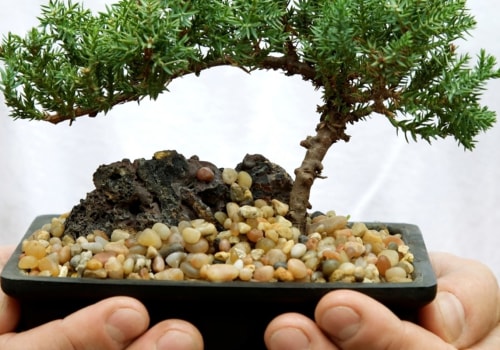
It is very a popular ornamental plant in Japan, and also occasionally elsewhere in temperate regions, used for ground cover in rockeries and as bonsai.

Several cultivars have been selected, the most widely grown being ‘Nana’, a slow-growing procumbent plant. Others include ‘Bonin Isles’, a strong-growing mat-forming plant collected on the Bonin Islands, and ‘Green Mound’, which may just be a re-naming of ‘Nana’. A variegated plant sold under the name J. procumbens ’Variegata’ is actually a cultivar of J. chinensis mis-named

Cotoneaster

Cotoneaster bonsai Cotoneaster is a genus of woody plants in the rose family, Rosaceae, native to the Palaearctic region (temperate Asia, Europe, north Africa), with a strong concentration of diversity in the genus in the mountains of southwestern China and the Himalayas. They are related to hawthorns (Crataegus), firethorns (Pyracantha), photinias (Photinia) and rowans (Sorbus). Depending on the species definition used, there are between 70 to 300 different species of cotoneaster, with many apomictic microspecies treated as species by some authors, but only as varieties by others.

The majority of species are shrubs from 0.5–5 metres (1.6–16 ft) tall, varying from ground-hugging prostrate plants to erect shrubs; a few, notably C. frigidus, are small trees up to 15 metres (49 ft) tall and 75 centimetres (30 in) trunk diameter. The prostrate species are mostly alpine plants growing at high altitude (e.g. C. integrifolius, which grows at 3,000–4,000 metres (9,800–13,000 ft) in theHimalayas), while the larger species occur in scrub and woodland gaps at lower altitudes.

The shoots are dimorphic, with long shoots (10–40 centimetres/3.9–16 inches long) producing structural branch growth, and short shoots (0.5–5 centimetres/0.20–2.0 inches long) bearing the flowers; this pattern often developing a ‘herringbone’ form of branching. The leaves are arranged alternately, 0.5–15 centimetres (0.20–5.9 in) long, ovate to lanceolate, entire; both evergreen and deciduousspecies occur. The flowers are produced in late spring through early summer, solitary or in corymbs of up to 100 together. The flower is either fully open or has its five petals half open 5–10 millimetres (0.20–0.39 in) diameter. They may be any shade from white through creamy white to light pink to dark pink to almost red, 10-20 stamens and up to five styles. The fruit is a small pome 5–12 millimetres (0.20–0.47 in) diameter, pink or bright red, orange or even maroon or black when mature, containing one to three (rarely up to five) seeds. Fruit on some species stays on until the following year.

Cotoneaster species are used as larval food plants by some Lepidoptera species including Grey Dagger, Mottled Umber, Short-cloaked Moth, Winter Moth and Hawthorn Moth (Scythropia crataegella). The flowers attract bees and butterflies and the fruits are eaten by birds.

Although relatively few species are native there, in the UK and Ireland Cotoneaster species are used, along with the related genus Pyracantha, as a valuable source of nectar when often the bees have little other forage in the June Gap. The red berries are also highly attractive to blackbirds and other thrushes.

Cotoneasters are very popular garden shrubs, grown for their attractive habit and decorative fruit. Many of the garden shrubs are cultivars, some of hybrid origin; of these, some are of known parentage, such as the very popular Cotoneaster × watereri Exell (Waterer’s Cotoneaster; C. frigidus × C. salicifolius), while others not. Many species have escaped from cultivation and become invasive weedswhere climatic conditions are suitable for them, such as the many Chinese species naturalised in northwestern Europe. C. glaucophyllus have become invasive weeds in Australia and California.C. simonsii is listed on the New Zealand National Pest Plant Accord preventing its sale and distribution because of its invasiveness.

Serissa

serissaSerissa is a genus of flowering plants in the family Rubiaceae, containing only one species, Serissa foetida. It is native to open sub-tropical woodlands and wet meadows in southeast Asia, fromIndia, and China to Japan. It is commonly called Snowrose, Tree of a thousand stars, or Japanese Boxthorn; and was formerly called Serissa japonica.

Snowrose and tree of a thousand stars are different cultivars. The only method of differentiating is measuring the difference in the shape and size of the flowers produced. It is an evergreen or semi-evergreen shrub, 45-60 cm high, with oval, deep green, rather thick leaves that have an unpleasant smell if bruised (hence its name foetida). The upright stems branch in all directions and form a wide bushy dome. It is grown for its neat habit, good coverage of branches and long flowering time. It is also valued for its rough, grey trunk which tends to get lighter in colour with age.

Serissa flowers practically all year round, but particularly from early spring to near autumn (Thanksgiving or Christmas). The 4- to 6-lobed flowers are funnel-shaped and 1 cm wide. They first appear as pink buds but turn to a profusion of white flowers. Fertilizing is especially important during the long flowering period. Many cultivars with double flowers or variegated leaves are also available. ‘Pink Snow Rose’ has pale pink flowers and leaves edged off-white. Other cultivars include: ‘Variegata’, ‘Variegated Pink’, ‘Pink Mystic’, ‘Snowflake’, ‘Snowleaves’, ‘Mt. Fuji’, ‘Kyoto’ and ‘Sapporo’.

Serissa is one of the most common bonsai, especially in Japan. It is not difficult to maintain as bonsai, but is very fussy. It responds adversely by dropping leaves if over-watered, under-watered, if it’s too cold, too hot, or even if just moved to a new location. The plant usually grows back to health when put back to better conditions.

Synonyms Leptodermis nervosa, Leptodermis venosa, Buchozia coprosmoides, Serissa kawakamii, Serissa serissoides, Serissa democritea, Serissa foetida, Dysoda foetida, Dysoda fasciculata, Democritea serissoides, Serissa crassiramea, Serissa foetida forma plena, Serissa foetida forma pleniflora, Serissa foetida var. crassiramea

Pieris

pieris bonsaiPieris is a genus of seven species of shrubs in the family Ericaceae, native to mountain regions of eastern and southern Asia, eastern North America and Cuba. Known commonly as andromedas or fetterbushes, they are broad-leaved evergreen shrubs growing to 1–6 m (3.3′ – 19.7′) tall and (3′ – 10′) wide. The leaves are spirally arranged, often appearing to be in whorls at the end of each shoot with bare stretches of shoot below; they are lanceolate-ovate, 2–10 cm (.8″ – 4″) long and 1-3.5 cm (.4″ – 1.4″) broad, leathery textured, and with an entire or serrated margin. The young leaves in spring are typically brightly coloured. The flowers are bell-shaped, 5–15 mm (.2″ – 2″) long, white or pink, and arranged in racemes 5–12 cm (16.25″ – 39.33″) long. The fruit is a woodycapsule which splits into five sections to release the numerous small seeds.

Pieris species are used as food plants by the larvae of some Lepidoptera species including The Engrailed.

They are commonly grown as ornamental plants, valued for year-round interest due to bright red new growth in early spring, chains of small, white flowers in mid-spring, and buds that remain on the plant through the winter. Numerous cultivars have been selected for different spring foliage colour. They grow best in a shady spot, sheltered from drying, winter winds. They prefer acid soil, and should be mulched once per year, using a two-inch covering of either peat or composted pine needles. The red leaves give the plant one of its alternative names, ‘Forest Flame’; the flowers another, ‘Lily of the Valley shrub’. “Forest Flame” is the name given to a hybrid between Pieris formosa “Wakeham” and Pieris Japonica, it is not a nickname for the plants generally.

The Mountain Fetter bush can be used to treat pain. It can treat headaches and sooth back and muscle pain. It is crushed.

Comments Off

Malus

malus bonsaiMalus the apples, are a genus of about 30–35 species of small deciduous trees or shrubs in the family Rosaceae. Other studies go as far as 55 species including the domesticated Orchard Apple, or Table apple as it was formerly called (M. domestica, derived from M. sieversii, syn. M. pumila). The other species and subspecies are generally known as “wild apples”, “crab apples”, “crabapples” or “crabs”.

The genus is native to the temperate zone of the Northern Hemisphere, in Europe, Asia and North America.

Apple trees are small, typically 4–12 m tall at maturity, with a dense, twiggy crown. The leaves are 3–10 cm long, alternate, simple, with a serrated margin. The flowers are borne in corymbs, and have five petals, which may be white, pink or red, and are perfect, with usually red stamens that produce copious pollen, and a half-inferior ovary; flowering occurs in the spring after 50–80 growing degree days (varying greatly according to subspecies and cultivar).

For Malus sylvestris domestica, see Apple. The fruit of the other species is not an important crop in most areas, being extremely sour and (in some species) woody, and is rarely eaten raw for this reason. In some southeast Asian cultures they are valued as a sour condiment, sometimes eaten with salt and chili pepper, or shrimp paste.

Crabapples are an excellent source of pectin, and their juice can be made into a ruby-coloured preserve with a full, spicy flavor. A small percentage of crabapples in cider makes a more interesting flavour. As Old English Wergulu, the crab apple is one of the nine plants invoked in the pagan Anglo-Saxon Nine Herbs Charm, recorded in the 10th century.

Crabapples are widely grown as ornamental trees, grown for their beautiful flowers or fruit, with numerous cultivars selected for these qualities and for resistance to disease.

Some crabapples are used as rootstocks for domestic apples to add beneficial characteristics. For example, varieties of Baccata, also called Siberian crab, rootstock is used to give additional cold hardiness to the combined plant for orchards in cold northern areas.

They are also used as pollinizers in apple orchards. Varieties of crabapple are selected to bloom contemporaneously with the apple variety in an orchard planting, and the crabs are planted every sixth or seventh tree, or limbs of a crab tree are grafted onto some of the apple trees. In emergencies, a bucket or drum bouquet of crabapple flowering branches are placed near the beehives as orchard pollenizers. See also Fruit tree pollination. Because of the plentiful blossoms and small fruit, crabapples are popular for use in bonsai culture; however, because the tiny trees still show the abundant, full-sized fruit of normal crabapples, it is important to thin out the fruit so that the trees do not exhaust themselves.

The Chestnut Crabapple is an exception in that its fruit is sweet tasting.A very hardy plant, the Chestnut Crabapple blooms in early to mid-May and is an excellent pollinator for other fruit apples. It produces a very large crabapple, up to 2″ (5 cm) in diameter, that ripens in early September with a pleasant nut-like flavor and good texture for fresh eating. The fruit quality holds well on the tree, being quite spritely at first and becoming sweeter later on, with a medium storage life.

Apple wood gives off a pleasant scent when burned, and smoke from an apple wood fire gives an excellent flavour to smoked foods. It is easier to cut when green; dry apple wood is exceedingly difficult to carve by hand It is a good wood for cooking fires because it burns hot and slow, without producing much flame

Comments Off

Berberis

berberis_bonsaiBerberis the barberries or pepperidge bushes, is a genus of about 450-500 species of deciduous and evergreen shrubs from 1-5 m tall with thorny shoots, native to the temperate and subtropical regions of Europe, Asia, Africa, North America and South America. They are closely related to the genus Mahonia, which is included within Berberis by somebotanists. Species diversity is greatest in South America, Africa and Asia; Europe has a few species, and North America only two

The genus Berberis is characterised by dimorphic shoots, with long shoots which form the structure of the plant, and short shoots only 1-2 mm long. The leaves on long shoots are non-photosynthetic, developed into three-spined thorns 3-30 mm long; the bud in the axil of each thorn-leaf then develops a short shoot with several normal, photosynthetic leaves. These leaves are 1-10 cm long, simple, and either entire, or with spiny margins. Only on young seedlings do leaves develop on the long shoots, with the adult foliage style developing after the young plant is 1-2 years old.

Many deciduous species, such as Berberis thunbergii or B. vulgaris, are noted for their attractive pink or red autumn colour. In some evergreen species from China, such as B. candidula or B. verruculosa), the leaves are brilliant white beneath, a feature valued horticulturally. Some horticultural variants of B. thunbergii have dark red to violet foliage.

The flowers are produced singly or in racemes of up to 20 on a single flower-head. They are yellow or orange, 3-6 mm long, with six sepals and six petals in alternating whorls of three, the sepals usually coloured like the petals. The fruit is a small berry 5-15 mm long, ripening red or dark blue, often with a pink or violet waxy surface bloom; in some species, they may be either long and narrow (like a bar, hence ‘barberry’), but are spherical in other species.

Berberis species are used as food plants by the larvae of some Lepidoptera species, including a moth, the Mottled Pug.

Berberis vulgaris (European barberry) and Berberis canadensis (American barberry) serve as alternate host species of the wheat rust fungus (Puccinia graminis), a grass-infecting rust fungus that is a serious fungal disease of wheat and related grains. For this reason, cultivation of B. vulgaris is prohibited in many areas, and imports to the United States are forbidden. The North American B. canadensis, native to Appalachia and the Midwest United States, was nearly eradicated for this reason, and is now rarely seen extant, with the most remaining occurrences in the Virginia mountains.

Some Berberis species have become invasive when planted outside of their native ranges, including B. glaucocarpa and B. darwinii in New Zealand (where it is now banned from sale and propagation), and green-leaved B. thunbergii in much of the eastern United States.

Comments Off

Acer buergerianum

Acer buergerianum (Trident Maple) is a species of maple native to eastern China (from Shandong west to southeastern Gansu, south to Guangdong and southwest to Sichuan) and Taiwan.

Acer buergerianumIt is a small to medium-sized deciduous tree reaching a height of 5-20 m with a trunk up to 50 cm diameter. The leaves are in opposite pairs, 2.5-8 cm long (excluding the 2-5 cm petiole) and 3.5–6.5 cm broad, hard, glossy dark green above, paler below, usually with three lobes; on mature trees the lobes forward-pointing and with smooth margins, on young trees with more spreading lobes and serrated margins. The flowers are produced in spring, yellow-green, in pendulous corymbs; they are small, with five greenish sepals and five yellow-white petals about 2 mm long, and eight stamens. The fruit is asamara with two winged seeds, each seed 4-7 mm diameter, with a 15 mm wing; the wings are forward-pointing and often overlapping each other.

The species is variable, and a number of varieties have been described:

  • Acer buergerianum var. buergerianum. Hubei, Hunan, Jiangsu, Jiangxi, Shandong, Zhejiang.
  • Acer buergerianum var. jiujiangense Z.X.Yu. Jiangxi.
  • Acer buergerianum var. horizontale F.P.Metcalf. Southern Zhejiang.
  • Acer buergerianum var. formosanum (Hayata ex Koidzumi) Sasaki. Taiwan (endemic).
  • Acer buergerianum var. kaiscianense (Pampanini) W.P.Fang. Gansu, Hubei, Shaanxi.
  • Acer buergerianum var. yentangense W.P.Fang & M.Y.Fang. Zhejiang.

A few trees have consistently unlobed leaves; these were first described as a variety A. trifidium var. integrifolium Makino (A. trifidium is an old synonym of A. buergerianum), but are now not distinguished from the species. Occasional unlobed leaves also occur on most trees with otherwise normal three-lobed leaves

It is widely grown in temperate regions as an ornamental tree. It was introduced very early to Japan, where its name translates as “China maple”. More recently, it was introduced to Europe andNorth America in 1896, and is now occasionally grown in parks and large gardens there. Mature examples may be seen at Westonbirt Arboretum in England, the Esveld Aceretum in Boskoop, Netherlands, Arnold Arboretum in Boston, Massachusetts and many other locations. 

Bonsai

Trident Maple bonsai

Trident Maple is a popular choice for the art of bonsai and responds well to techniques that create leaf reduction and ramification, is suitable for many style and sizes of bonsai.

Cultivars

Several interesting cultivars have been developed, many of these bear Japanese names. Notable cultivars include ‘Goshiki Kaede’ (striking pink and greenvariegation), ‘Kifu Nishiki’ (roundish, almost un-lobed leaves), ‘Mino Yatsubusa’ (dwarf with long, narrow leaves) ‘Mitsubato Kaede’ (distinctive cork-like trunk) and ‘Naruto’ (strongly incurved leaf surface).

Comments Off

Ficus Retusa

ficus retusaFicus retusa, or Ficus microcarpa, also known as Cuban-laurel is “a rapidly-growing, rounded, broad-headed, evergreen tree can reach 15 metres (50 feet) or more in height with an equal spread. The glossy, dark green, leathery leaves are densely clothed on large, somewhat weeping branches and are usually infested with thrips. New growth, produced all year long, is a light rose to chartreuse color, giving the tree a lovely two-toned effect. The smooth, light grey trunk is quite striking, can grow to around a metre (three or four feet) in diameter, and it firmly supports the massively spreading canopy.

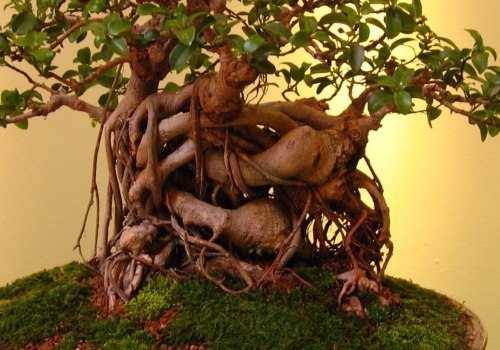
Ficus microcarpa var. nitida, also known as ”Banyan Fig”, Taiwan Ficus, Ginseng Ficus, or ”Indian Laurel Fig”, is a species of evergreen woody plant in the fig genus, native to Malaysia, Taiwan, and other Southeast and East Asian countries. The tree has small, dark green leaves which alternate up the stem and which are oval. It has a gray to reddish bark dotted with small, horizontal flecks, called lenticels, and are used by woody plant species for supplementary gas exchange through the bark. It is considered one of the easiest trees to keep as a Bonsai

Comments Off